MOPITT
(Measurement of Pollution in the Troposphere)
Explore the measurements of Carbon Monoxide (CO) in the troposphere collected by the MOPITT instrument onboard the Terra Spacecraft. Understand the global pattern of pollution and how CO moves through the atmosphere.

NASA Earth Observing System
A series of coordinated polar-orbiting satellites that monitor Earth's climate and atmospheric conditions. EOS missions focus on some climate science areas: atmospheric composition, carbon cycle, ecosystems and biochemistry, climate variability and change, water and energy cycles, weather, and Earth surface and interior. The three satellites that compose the EOS are: Terra, Aqua, and Aura. You can click in them to see more details.
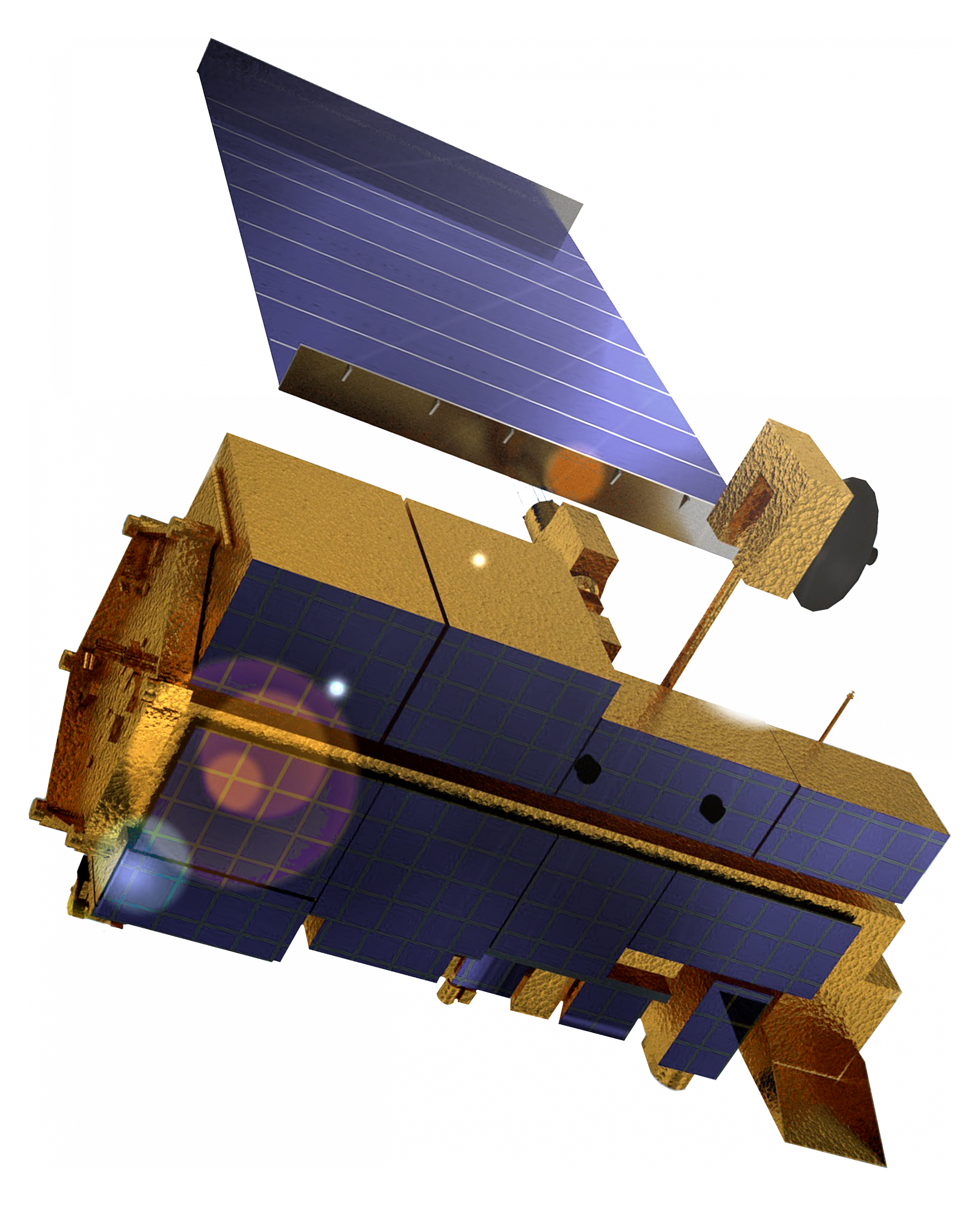
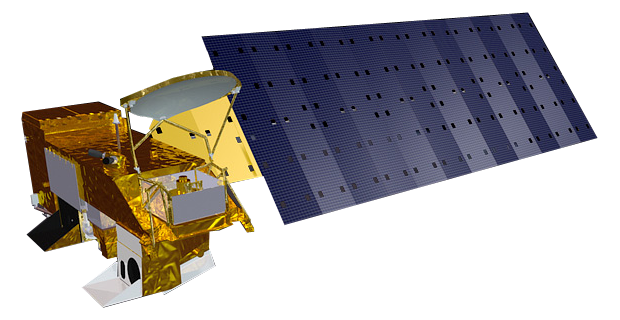
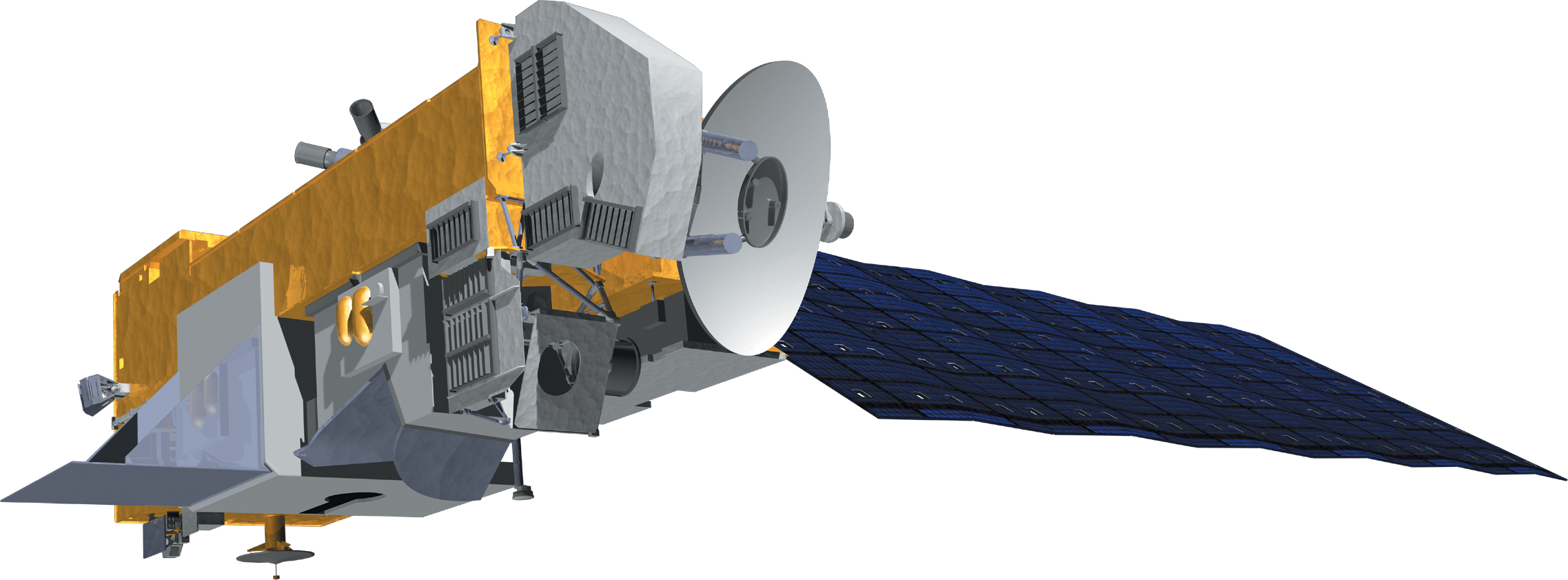
Terra Satellite
Terra carries multiple instruments including MOPITT which monitors global carbon monoxide. MOPITT provides global measurements of CO concentrations in the troposphere, helping us track air pollution and understand atmospheric transport.
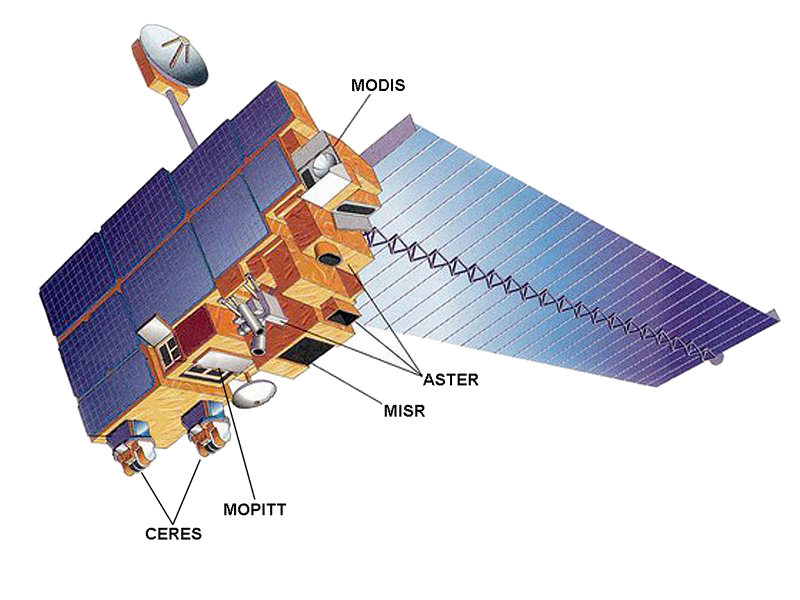
Terra satellite (EOS AM-1)
Launched in 1999, this is the first of the three EOS satellites. It follows a Sun-synchronous orbit(it's always "facing" the sun at the same angle) around the Earth at an altitude of around 705km. It comes equipped with 5 sensors that monitor different aspects of the environment on Earth:
- ASTER: creates high-resolution images of clouds, ice, water and the land surface.
- CERES: measures solar-reflected and Earth-emitted radiations.
- MISR: measures the intensity of solar radiation reflected by the Earth.
- MODIS: monitors Earth's atmosphere, oceans and land, tracking things like vegetation and changes in landscape and water levels.
- MOPITT: measures the carbon monoxide levels in the troposphere. Tip: scroll down to see the map of its measurements.
Fun fact, Terra is the latin name for Earth!
Aqua satellite (EOS PM-1)
This is the second satellite launched in the EOS program, launched in 2002. Its purpose is to study precipitation, evaporation and water in general. It was in a special formation with other satellites (including Aura) called "A-train", but has since left it in 2022 following fuel complications. Its now in free-drift mode.
Fun fact, Aqua comes from the latin word for water!
Aura satellite (EOS CH-1)
The "youngest" of the 3 satellites, Aura was launched in 2004. It focuses on studying the Earth's air quality and ozone layer. In a similar vein to Aqua, it followed the "A-train" formation with other satellites, but has been drifting since 2023 for fuel saving purposes.
Fun fact, Aqua comes from the latin word for air!
What is Carbon Monoxide?
Carbon monoxide (CO) is a colorless, odorless gas produced whenever carbon-based fuels — such as gasoline, wood, natural gas, or coal — do not burn completely. In the atmosphere, CO plays an important role in air chemistry and climate processes.
Near the ground, carbon monoxide contributes to the formation of ground-level ozone, a key component of smog that affects both air quality and human health. High concentrations of CO reduce the amount of oxygen that can be carried by the blood, leading to health effects such as headaches, dizziness, and, at very high levels, even death.
In the upper atmosphere, CO acts as a tracer for studying how air masses move and mix. By tracking CO from sources like wildfires, urban emissions, and biomass burning, scientists can better understand how pollution is transported across regions and how it interacts with greenhouse gases.
The MOPITT instrument on NASA’s Terra satellite continuously measures global CO levels in the troposphere, helping researchers monitor changes in air quality and the long-range transport of pollutants.